

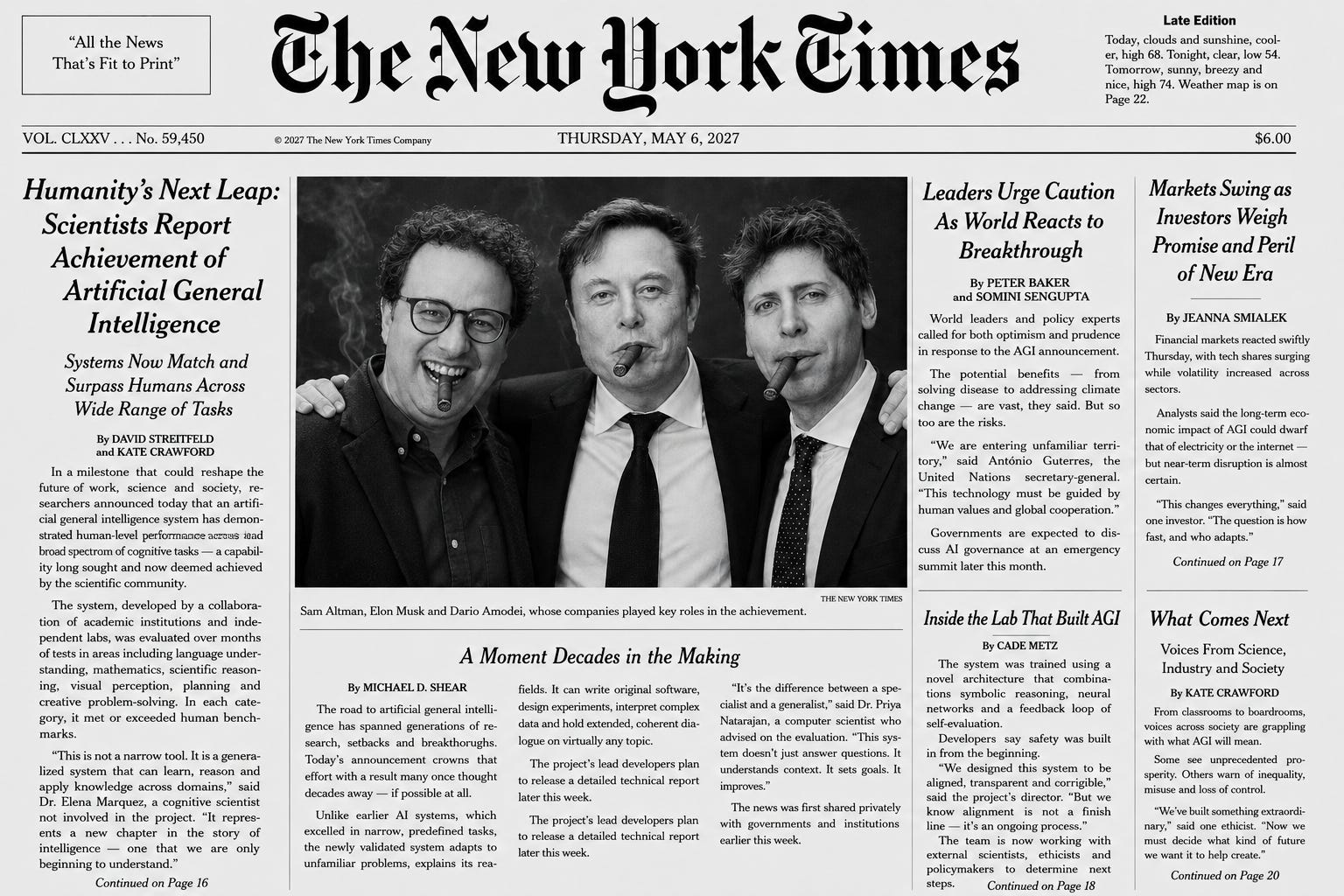
If you haven’t heard about “AI slop” by now, I would be very concerned. You might have your head under the sand.
There’s a tsunami coming our way as professionals. Whether we like it or not, finance, legal, design, engineering, medicine a year from now a massive part of our commodity will be gone.
For many it’s easier calling it slop and fighting it.
The other day I posted on Reddit (- yes, that awful place to post I know - ) about something I “discovered” can improve site visibility and AI discoverability.
The “technical experts” on that thread, called me a few things. From caveman to things I can’t replicate in text. But I understood them. It’s all coming from a very personal space. In a not too distant past, their well earned knowledge was the biggest commodity.
Now anyone can do or lean in one day what took them years.
That’s completely gone. AI is producing outcomes for non-technical people that were impossible a few years ago.
But the quality some might say, it’s “slop” some other might say.
Yes, 100% but it’s my freaking AI slop. I did that. Jorge from the grocery store created his own landing page, for near nothing. Martha creating a portal for her poetry students because she couldn’t afford Slack, or Mighty.
The list is long. Normal people are getting supercharged by AI.
The results for experts are not perfect, not even near perfect. But for 99% of the use cases, and for 99% of the population, the results are pristine.
On top of that we are seeing the rise of hardware and Ai where models are accelerating the pace in which hardware is designed and put out there.
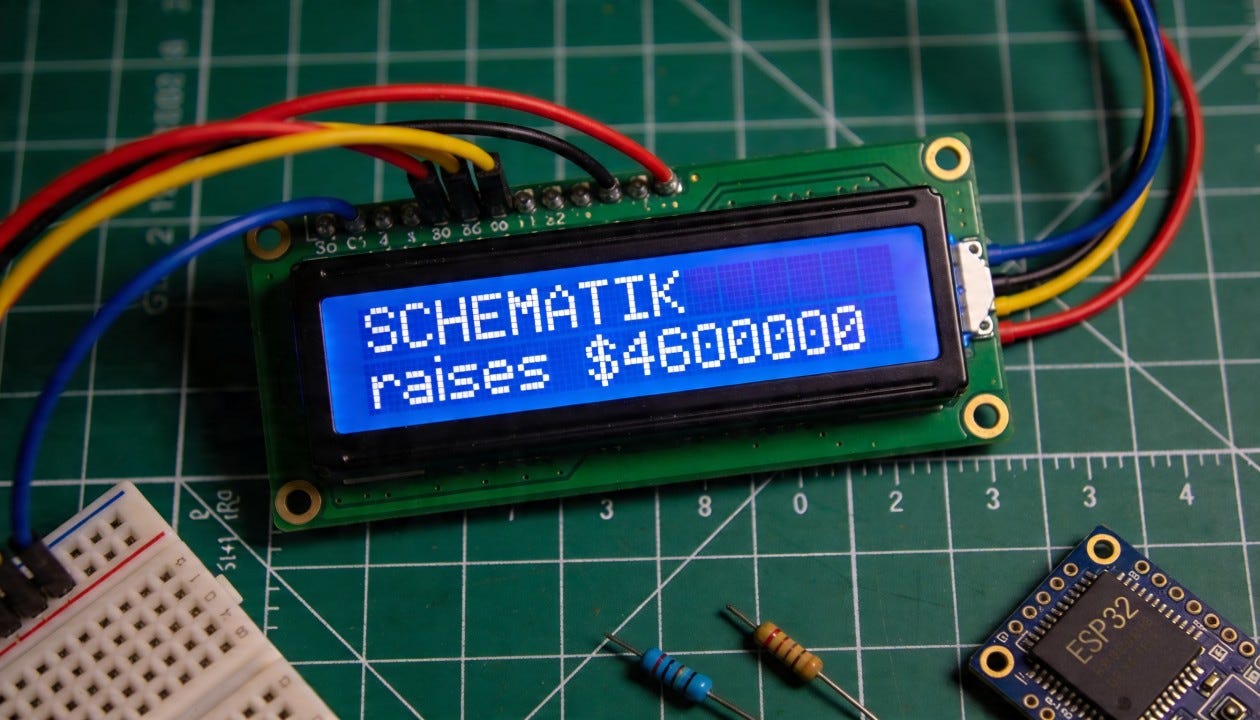
Schematik the “Cursor for hardware” by Samuel Beek recently raised a whopping 4.6M EUR round led by Lightspeed Venture Partners, with Puzzle Ventures.
Hardware is hot now and it’s receiving a lot of attention.
Rising tide lifts all boats
I don’t think many understand that if a website has the “wrong” spacing or uses too many Lucida icons. Most users will never notice. Maybe if you are a big brand or startup that will look unpolished, but who gives two actual dimes. The key of the matter is that AI is radically changing the way non technical people in many fields can now develop something and acquire new knowledge in the process.
It will remain true that a field professional using AI will be 10x more productive, but that’s not the point. Or maybe that’s actually the point.
There’s a very uncomfortable truth, we can whine all we want but it’s here. I worked in finance all my life, Excel has been my longest relationship. I’m used to it, to work, formulas, complex chains that sometimes we had to write down on paper to get the formula just right. I remember when we had a “Hey! let’s use INDEX here” at EY.
Those days are gone. The fact that this is not yet a thing in every company across the planet, every professional and finance department is concerning. It’s a tsunami of change. Thousands of jobs that are today repetitive tasks will completely evaporate. And not in 10 years, but now.
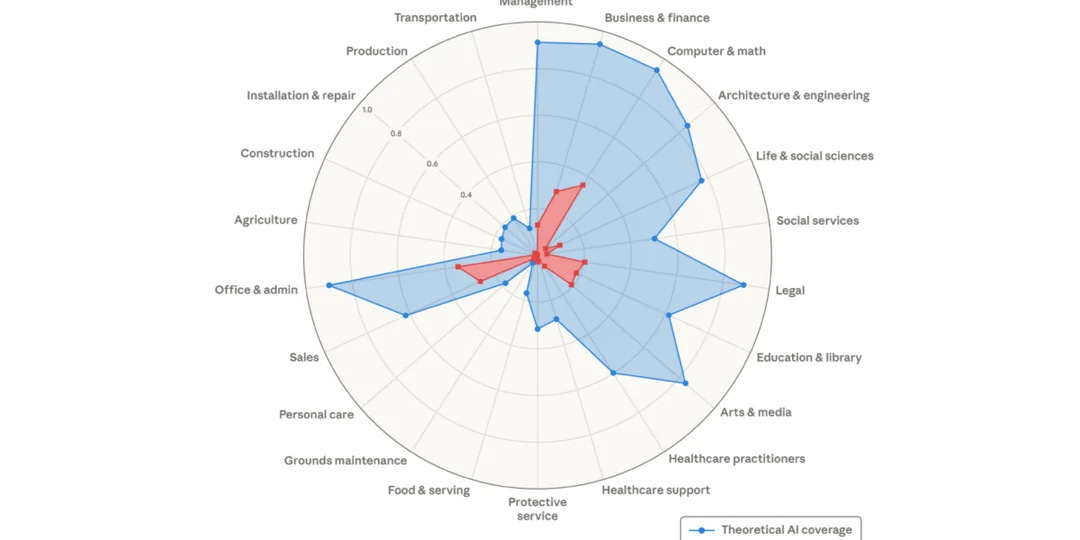
This chart by Anthropic shows the jobs AI could potentially replace and the gap we have in others that might soon be tackled by robotics.
The moment a top exec realizes they can cut overheads by ~50% just by removing “friction”, it’s game over.
Maybe they see it now, but the PR cost is too high. They’ll let others take the initiative and then piggyback the layoffs.
Most industries were protected by friction in the past. Years of accumulated knowledge. Expensive tools. Gatekeeping. Specialized language. Access.
This applies to every aspect of work. Legora leading the way in legal for example, and for those who understand what’s in play here, will know that most of the legal work is redline, drafting, mailing and time consuming tasks that add close to zero value to the legal expertise required. Strategy.
And “good enough” destroys markets faster than excellence.
A lot of professionals are reacting understandably very emotionally to this. Calling everything AI touches “slop.” Mocking it in so many ways. Or being completely dismissive about it. Acting as if the current quality level is the final form.
But technology compounds. Fast.
Some people compare today’s AI output against maybe senior experts with 15 years of experience. But what they fail to see is that this output took less than 5 minutes to produce.
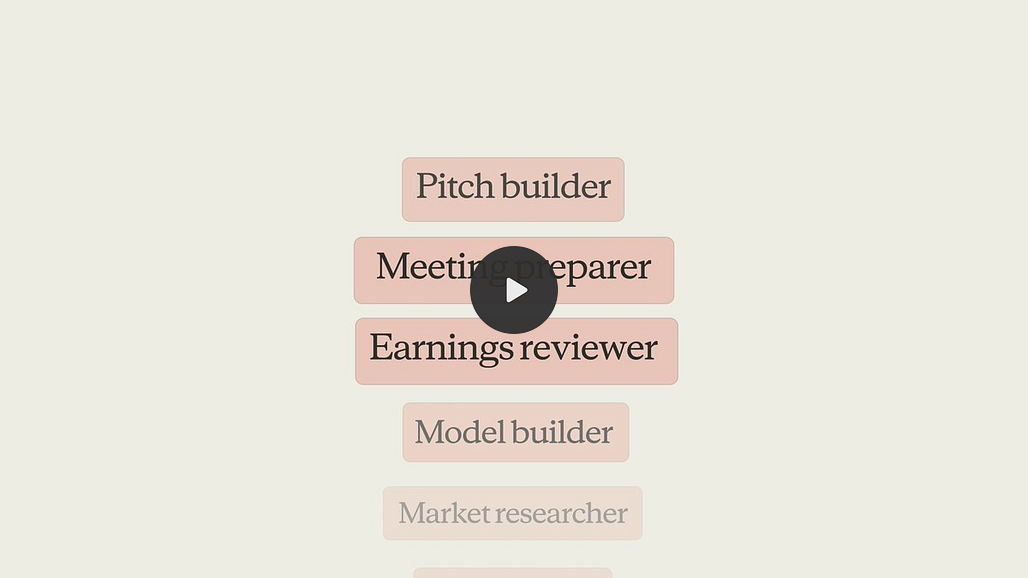
Let’s take Claude Co-work as example. This can produce any document that would take a team a week plus to build. This machine can read documents and complete documentation tasks in minutes. It can audit tremendous amounts of data in seconds.

One of the founders I worked for a few years ago found a formula error in one of my models. The guy ex investment banker couldn’t deal with the fact that one formula in 19,000 formulas that file had was “incorrect”, meaning just pointing at an empty cell.
He asked me to never again have an error in my files. And I remember telling him. “I understand, my promise is that I WILL have many more in the future, it’s not humanly possible for a single person to always audit 19K formulas, controls will be put in place, but it’s a certainty it will fail at some point?
Fast forward to today with AI I would have stated “this won’t happen again” and I would be 99.99% sure.
The market compares it against cost, speed, and convenience.
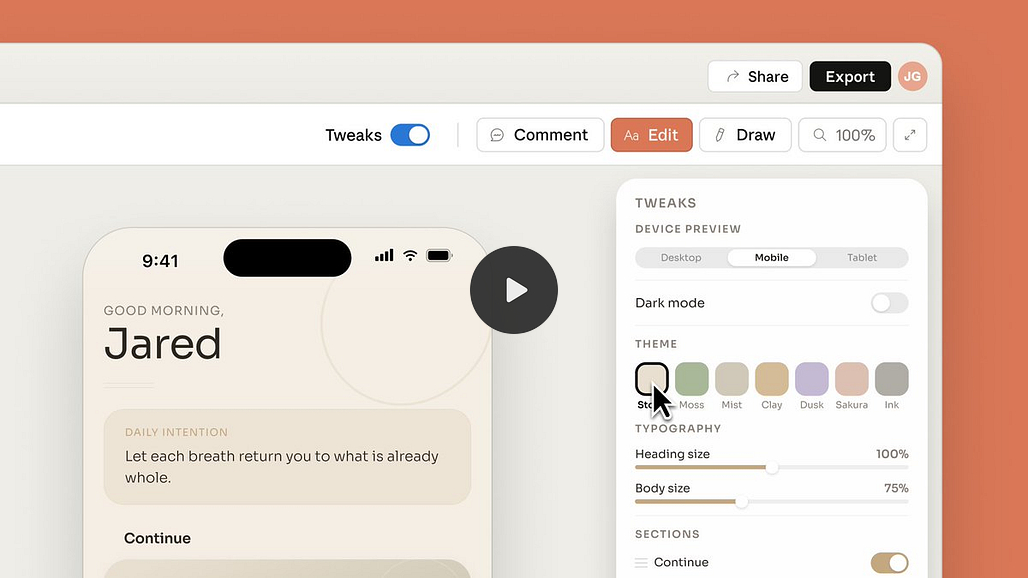
Claude Design appeared a month ago, now this tool allows me to iterate in design as non designer faster, and produce top quality work indistinguishable by most from a $20,000 website or product.
So the scary part is not AI replacing the top 1% of us who know how to talk to AI, what and how to ask AI.
The scary part is what happens to everyone in the middle whose value came from producing competent, repeatable work. And most people are not even self-aware of what’s going on. Trust me, ask around you if you’ve read this far. Help them wake up so they can be prepared, there’s still time.
AI is changing our identity as professionals. At the end to me the professionals who survive won't be the ones screaming 'AI slop' the loudest. They'll be the ones working with AI to create AI Super-Slop.
This isn't just about our jobs anymore. It's about our identity.
The commoditization of technical knowledge is real and accelerating. The question the article doesn't reach: what's left that AI structurally cannot commoditize? Not "soft skills" or "creativity" — those are already being compressed. Something more fundamental. The capacity that was always the source of genuine expertise — not the accumulated knowledge, but the judgment that knew what to do with it.
Exploring this directly here: https://newsletter.awarelife.co.il/p/the-ai-revolution-is-not-about-technology